
Investments and Inheritance During Retirement
Disclosure: This post may contain affiliate links or paid partnerships. I may earn compensation if you click a link or make a purchase, at no additional cost to you. See my disclosure for more information.
You may be wondering why this investment topic is in a blog about Gen X not having enough savings in retirement. Saving money for your future doesn’t stop once you file for Social Security. You can build an emergency fund and invest money after retirement too; it’s never too late.
You may have extra money on hand because you have taken FAWA’s advice by simplifying your life and starting a part-time job or creating passive income. Or perhaps you will receive a financial windfall at some point in the next few years. No, I am not talking about winning the lottery or hitting the jackpot at a casino. The 5 most common types of windfalls received later in life are:
Lump-sum pensions or retirement distributions — You take a single payout from an older corporate pension plan or liquidate accumulated assets.
Business Sale or Equity Events — You may cash out ownership stakes in a business or late-career stock options as retirement approaches.
Downsizing or Home Sales — You could get a large equity payout after selling your home to move into a smaller residence or in a lower-cost area.
Payouts and Settlements — You could receive life insurance proceeds after the loss of a spouse, or get a settlement from a legal or disability claim.
Inheritances — Older family members may leave you property, investment portfolios, or cash.
Investments During Retirement
It is very important to carefully manage any money you receive at this stage of life. You have less time to recover from financial mistakes. If you believe you may receive a sizable amount of money, please consider the following:
Consult a professional —Don’t take risks and don’t rely only on advice from friends, neighbors, family members, or online sources. Financial planners and tax professionals will often provide you with a free consultation. It will cost you nothing but time by doing this, and you will leave with a greater understanding of your options moving forward. Knowledge is power.
Eliminate high interest debt — Pay off credit cards or costly loans immediately to reduce ongoing financial stress.
Build an emergency fund — If you haven’t done so already, build a 6-month cushion to see you through rough patches. This reserve will allow you to sleep better at night.
Take a pause before spending — Do not make any large purchases or emotional decisions for at least 6 to 12 months. Park the money safely in a high-yield savings account or a short-term certificate of deposit while you plan your next steps.
Maximize retirement catch-up contributions — Consider catch up options in a 401 k or IRA. The standard 401 k yearly limit is $24,500. In 2026, the standard 401(k) catch-up contribution limits are:
$8,000 for those aged 50–59 and 64+ (Total $32,500)
$11,250, a ‘super catch up’ for those ages 60-63 (Total $35, 750)
IRA base contribution limits are at $7,500 in 2026, and the standard catch-up available any time after age 50 is an additional $1,100 for a total maximum contribution of $8,600 per year.
Please note that 401 k and IRA contributions cannot come from unearned income sources such as Social Security, pensions, inheritance, proceeds from the sale of a home, etc. There is a quick work around available, if you are still working.
If you have a part-time job or side hustle after retirement, you can put the equivalent amount of money you earn into your 401 K or IRA. Then you pull an equal amount from your unearned income sources to live on. It becomes a nice additional incentive to keep working part-time after retirement.
Another investment option to consider is real estate. I know one retiree that pulled $50 K from his 401 k during the 2008 housing crisis and bought a condo in cash. Over the past 18 years, he has had it occupied by renters consistently. It is now worth triple what he paid for it, and he has grossed over $260,000 in passive income. After property taxes, insurance, HOA fees, and maintenance, he has netted over $150,000. That is quite a return on investment. If this is interesting to you, make sure to consult with a local real estate professional to learn about the various economic factors in your area first.
Inheritance
It is estimated that approximately 20% of Gen X will receive an inheritance. Are you amongst the lucky few? The average dollar amount that individuals can expect to receive is around $320,000 to $335,000.
But don’t count your chickens before they hatch. End of life medical care is becoming increasingly expensive. Average medical spending during the last year of life in the U.S. is approximately $80,000 per person. Medicare only covers 66% of end-of-life expenses. Assisted living, nursing homes, or in-home health aides may or may not be covered by standard health insurance or Medicare.
Utilizing hospice care significantly reduces intensive hospital and ICU expenses, which can otherwise cost thousands of dollars per day. And for final arrangements? A standard funeral, viewing, and burial expenses range from $7,000 to $12,000.
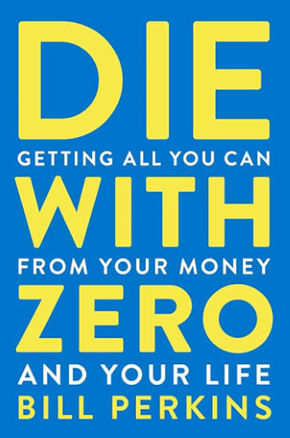
Learn more about the book here.
I’m sorry to be the bearer of bad news. But I would rather you are mentally prepared for the possibility of a large medical expense hit for your loved one in their last couple of years.
Another factor to consider is this buzzworthy book that many are discussing..in both positive and negative ways. The core concepts of Die With Zero cover:
Money is just stored life energy meant to be traded for experiences. Dying with a huge surplus means you worked for free and missed out.
Early experiences in your life (and retirement) keep paying you emotional returns for the rest of your life as you look back and share stories.
Your physical ability to do hard things, like hiking and travel, declines with age, so plan to do them in your earlier years of your retirement.
If you plan to leave money to children or charities, give it when they are younger and it can actually help them thrive, rather than waiting until you pass away. On average, inheritors receive their money around age 60. The author believes the optimal age for inheritance is between 26 and 35 when they can pay off student debt, start a business, or buy a house.
Shockingly, nearly half of Baby Boomers intend to spend their wealth during their lifetime rather than leave it as an inheritance for their children. They prioritize personal experiences, travel, and lifestyle enjoyment over preserving any money for their family members.
More than half of Gen X, and almost 60% of Millennials say they are depending on an inheritance; it is vital for long-term security or housing. Unfortunately, there are indications that only about 22% of Boomers actually intend to pass down a traditional inheritance. That is quite a gap in expectations versus reality. How this impacts you depends on whether you are an ‘older Gen X’ or a ‘younger Gen X’.
If you are an older Gen X, born 1965–1971, you most likely have/had parents from the Silent Generation (or late Greatest Generation), as Baby Boomers were too young to be having children in the mid-to-late 1960s. You are more likely to receive an inheritance as the Silent and Greatest Generations are traditionalists when it comes to family money.
If you are a younger Gen X, born 1972–1980, you most likely have early Baby Boomer parents, as older Boomers reached prime parenting age during the 1970s. It is this segment of Gen X that may or may not receive a traditional inheritance.
What about you Gen X reader? If you received a windfall during your retirement, would you make plans to leave what you could to your children? Or would you continue to help them now, with real-time, strategic financial help as they need it? Would you leave an inheritance to them at all?
This is a difficult question as all families are different so there is no one size fits all answer. Our generation has been surveyed, and generally speaking, Gen X will try to leave something for their children.
First and foremost, we understand the struggle with the current economy. We know how important this transfer of wealth could be to our kids. The bigger question is, how much will be left? The amount we are able to leave will vary greatly depending on our overall wealth and how much we spend in retirement and on our own long-term healthcare.
Rising health care expenses, longer lifespans, and the high cost of living mean many Gen Xers may deplete a large portion of their savings before they can pass them down. Some may lean toward ‘giving while living’—providing financial support for major milestones like buying a home, education, or weddings rather than waiting to pass down wealth through a traditional will.
