
DIY Retirement

Disclosure: This post may contain affiliate links or paid partnerships. I may earn compensation if you click a link or make a purchase, at no additional cost to you. See my disclosure for more information.
The retirement gap is intimidating isn’t it? Most financial advisors will tell clients they need $1.4 million in savings to sustain them in a comfortable lifestyle of their choosing. A comfortable home in an upscale neighborhood, with regular travel and ample discretionary spending - withdrawing $60,000 a year. What these same advisors won’t tell you is that less than 3.5% of all American retirees have a million dollars or more in their retirement accounts. They run financial scenarios based on the typical Boomer definition of what retirement looks like to them. A single nuclear family home, living far away from extended family members. It is in their interest to do so. This option is the costliest and requires more years of work, more savings, more appointments to check in with a financial advisor to see if it is time to pull the trigger and retire. Keeping the fear of do I have enough to retire keeps them in business.
Like it or not, human nature is to focus on the top earners, the elite 3.5% of us that have managed to save the $1.4 million financial analysts say you need to retire comfortably. I am happy that those few have managed to find success, I really am. But why is everyone paying attention to them as if that is the norm? It is not. In fact, it is estimated that almost 40 percent of Gen X is heading into retirement with little to no savings. That is the norm.
My prediction is Gen X is going to break the mold and redefine retirement on our own terms.
If you have little to no 401 k savings, no IRA, no investment portfolio, it doesn’t mean that you don’t get to retire. It just means that your retirement will look different from that of the typical Boomer image of retirement. It may not be permanent leisure with a frosty cocktail in your hand on a tropical beach. Quietly and methodically, Gen X will help redefine what retirement looks like for a vast majority of the working middle class moving forward.
What Did I Do Wrong?
It’s helpful to look at things from a macro view once again. Starting in the 1980s, traditional pensions began to be phased out, and employers shifted to 401 k plans to avoid unpredictable financial liabilities. If a 401 k was offered during this transition, not much explanation and education was given on the importance of saving for your future.
During the 1970s and 1980s, wages for the middle class stopped growing with the cost of living. One income could no longer support an entire household; the cost of housing, healthcare, and education outpaced what wage earners could bring in. Prices of homes used to be two times a worker’s yearly salary, now they are five or six times as much.
Gen X has always been the transitional generation; we had analog childhoods and digital adulthoods. We are the transitional generation for retirement as well.
Many of us feel bad when we compare our current financial situation with our parents. You shouldn’t and here’s why.
The playing field is different. Do you remember the old gold watch retirement tradition that started in the 1940s? A long-serving employee would retire after 30 years and a symbol of corporate loyalty, a gold watch would be gifted to them at their retirement party along with a pension. Companies treasured faithful service.
Now it is commonplace to last only 5 years with an employer. Families frequently move to follow job opportunities. Retirement funding changes in the 1980s meant more financial responsibility was passed to the worker than in our parent’s generation. And rather than honoring dedicated long-term employees, older workers are seen as a burden. How many times have you heard of people let go in their 50s after decades of service? Too many.
The goal posts have changed. The dramatic increase in the cost of living has given our generation the least amount of time to respond. In 1992, the oldest of Gen X were born in 1965 and were 27 years old and in the early stages of their careers. Financial experts estimated at that time a typical American needed $229 K to retire comfortably. The national average wage that year was $22,935 and we were advised to save 10 times our annual pay to cover retirement.
In 2002, the amount was bumped up to $332 K. In 2012, it jumped again to $443 K. In 2022, the required nest egg skyrocketed to $1 million to $1.25 million to retire comfortably. And of course, today we find ourselves at a lofty $1.4 million.
I am pointing this out so you can see that you are justified in your feelings of inequity. The system has been working against you. It has been more difficult for us than it was for our parents. I roll my eyes too when I hear a Boomer say, ‘When I was your age I pulled myself up by the bootstraps…’.
It also makes me angry when I hear Boomer or Millennial financial analysts point out that Gen X is going to be in a world of financial hurt as if we all have done something wrong, been so off the mark. All of us? Really?? Or is it that the financial expectations just exploded and we don’t have enough working years left like the Millennials still do to pivot and meet goals?
Show Yourself Some Grace And Then Craft A DIY Retirement Plan
It is easy to look back over the last 30-40 years with the wisdom you hold now and play the ‘What If’ game. What if I sold that house at the top of the market in 2007 before the 2008 housing recession? What if I never married that spouse that I lost half of my assets to in divorce? What if I never got in that accident that built up so much medical debt that I had to file for bankruptcy? Life is challenging. S*** happens.
It is normal to do a mental replay of past events and wonder how things could have been different. We all do it. But don’t be like a record player arm that gets stuck in the run-out groove at the end of a song looping constantly. It is important to show yourself some grace and then move your energy and focus on what is happening around you now. You can’t change yesterday, but you can change today and tomorrow.
There are so many voices out there fueling anxiety by pointing out the woeful financial situation Gen X is in. We are behind in savings, we have no cushion, we may have to survive on Social Security alone. All criticism and doom and gloom. But few are giving specific advice on what folks can do moving forward. This is one of the main reasons I created this site, written by Gen X for Gen X, a guide on what steps you can take today, tomorrow, and moving into retirement.
Despite what all the financial advisers want you to hear, millions and millions of younger Boomers have already retired with fewer savings than you think. They were caught off guard too by the goal posts changing. Retirement is more of a state of mind rather than a pile of cash. Even with little money saved, you can have an awesome retirement when you focus on freedom rather than anxiety. Gen X is feisty, resourceful, and hard working. You may not have enough in your savings account to grab the attention of a financial analyst, so it’s time to create a DIY Retirement Plan.
Analyze Your Lifestyle Creep
You make more money. You spend more money. Lifestyle creep happens when your spending rises as you make more money. When you are first starting out and you get a promotion or pay off a bill and have room in your budget, you treat yourself with something. Often it happens quietly, a small choice here, a little purchase there but it can all add up quickly. You might upgrade your apartment, order take out or grab a drive-thru coffee more often, or subscribe to more streaming services. Later in life you may purchase a larger home with a yard for the kids, buy a bigger truck, buy a recreational ‘toy’ such as an RV or a boat for the family to enjoy, or spend a lot of money building memories on summer vacations.
The human brain gets used to nice things quickly. The joy fades after a few weeks and your shiny, new thing starts to look normal. You then look for another upgrade to get that next wave of joy. When you spend all your money, you lose choices. Your emergency fund and long-term savings remain low.
The worst part? You must keep working just to pay for your new expensive things. If you want freedom to retire you will need to take a hard look at what you have brought into your life and what it is worth to you at this point. One of the most heartbreaking Gen X comments I hear is ‘I will never be able to afford to retire.’ If your current lifestyle includes a lot of financing (mortgage, car(s), credit cards, name brand motorcycle) then yes, you may not be able to retire because you need big money to keep rolling in to make all of those payments.
Retirement budgets are built on keeping costs low. If freedom is your ultimate goal, analyze your lifestyle creep. If you have expensive credit card debt and a name brand motorcycle that is only half paid off, you may want to consider selling the motorcycle and paying down (or off) your credit card debt. When your monthly income is limited, like in retirement, debt is a dangerous thing.
Once you upgrade your life, downgrading becomes very painful. What is more important to you, your freedom or your boat? What is more important to you, your freedom or your second car? Are the first and second mortgages on your home too high and prevent you from being able to retire? It may be time to dig deep and make tough choices.
Before I go any further, I want to say that most of us have spent years living paycheck to paycheck with just enough to survive. I want you to know that if you are in this category, this is majority of Americans. Full disclosure, I am in this category too, so I am not here to cast shade on anyone. One of the key strategies to a successful low-cost retirement is streamlining your life. If your second car or recreational toy is paid off, that’s great. Consider keeping it and enjoying it during retirement. Just don’t forget to add in gasoline, insurance, and maintenance as holding costs.
Remember how simple life was in the 70s and 80s? We had just the basics — housing, utilities (electricity, water, phone, TV), car payment, insurance, food, and clothing. This is your goal as you assess your lifestyle creep. How far can you pare down your current lifestyle and spending without eliminating those things that you hold near and dear to your heart that you can afford to move forward?
Lower your cost of living. Ben Franklin was right, a penny saved is a penny earned. When you save money it has almost the same impact as earning that same amount of money.
Make a Realistic Retirement Housing Plan
The next thing to do in creating your retirement plan is to sketch out where you will be living. Is it in the US or abroad? If in the US, what state and city? Will you remain where you are now or will you be moving? Housing is the largest expense in retirement, so it is time to become creative.
Did you know that Gen X is the most likely of any generation to consider purchasing a multigenerational home? Approximately 19% of us are considering this option, which is a total shift from the traditional Boomer retirement model of a separate home living far away from family. We are caught in the middle between taking care of aging parents and looking after adult children who may be struggling to make ends meet. Living under the same roof solves all sorts of problems including reducing the amount you need to retire.
Not interested? I understand…sometimes it is better for families to live under separate roofs. But Gen X welcoming the potential solution of multigeneration housing shows how creative we are getting as we approach retirement. We own 30% of all U.S. real estate and 73% of us own our own homes. Our equity in our homes is one of our strengths despite being retirement savings poor. I guess we’ve done something right as a generation!
Having the safety net of your home equity is great, but getting it to work for you in supporting your retirement goals in your later years is the real trick. Some retirees downsize their homes and slide the proceeds at closing into their retirement savings accounts. Others may refinance and take the balance to reinvest in a small income-producing property such as a rental condo. NOTE: Always get professional advice before taking any large financial step such as selling or refinancing a home. DO NOT rely on online advice.
There is a rising trend as adult children move away to rent out the spare bedroom to bring in extra monthly cash. Do you have extra land that you can advertise to allow folks to store RVs or boats on for extra monthly income? Neighbor Storage Do you have an empty driveway or private garage that you are not using? Spacer If you live in the city do you have an assigned parking spot that you don’t use? ParqEx and Prked If you or a family member owns a home or condo they are not using consider listing it as a rental on Airbnb or become a landlord and rent it out to a tenant.
It’s time to get creative Gen X. Look closely at your housing assets and see if you can leverage them in a way to pay down your debt, bring in monthly income, or add to your retirement savings.
Run Your Numbers
Check out your estimated Social Security check at SSA.gov. Add any other monthly income you may have after retirement. If your savings are on the lower side plug in $1000 for take home pay for a potential part time job. If you have savings, divide the total by 25 (recommended 4% safe withdrawal rate per year), and then divide again by 12 for the monthly amount you can add to your budget. Of you can use the Rule of 300 shortcut and divide whatever is in your retirement savings account by 300 to get your monthly payout.
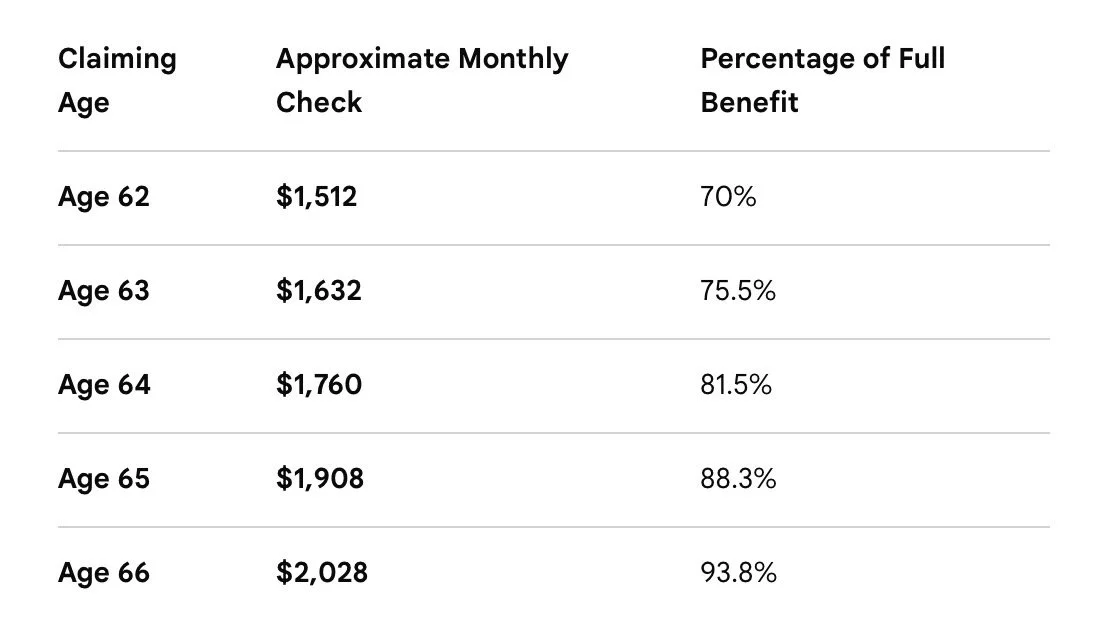
Example: The average monthly Social Security retirement check in 2027 is projected to be between $2,160 and $2,185. If we go with $2160 and you choose early retirement, you will start with a 30% reduction at $1512/month. There is no pension, no passive income, no side hustle, but a fun $15/hour 20 hours/week part time job would add $1000 per month. For this scenario run let’s say you have $50,000 in your 401 K. If you add the safe 4% withdrawal rate per year, that is $2000. Dividing that into monthly budget deposits it would be $167/month. You would have a $2679/month retirement budget. This can be a tight budget if you are solo.
If a couple had more or less the same Social Security check and both agreed to get a part time job, their total with the $167/month retirement savings is now $5191. There is comfort and safety when retiring with others.
When should you take Social Security? There is no right or wrong answer here, take Social Security when you need it. A bird in the hand is worth two in the bush. You may have to still find part-time work or side hustles, but it will be easier to manage than not having a regular Social Security check coming in. If you can delay taking it until age 65 or 67, fine. But know that there are many factors to consider other than just money when deciding when to take Social Security (the green light years).
I imagine a little devil sitting on one shoulder and a little angel sitting on the other shoulder talking to you when this decision is made.
Angel: Delay by a year or so. You can still save money because you are not a fixed income yet.
Devil: If you haven’t been able to save money up to now, who’s to say that another year or two of work will result in anything different?
Angel: Delay by a year or so. You will get a larger monthly Social Security check.
Devil: If you wait one year, you get an extra $120/month. If you wait two years, you get $248/month more. Is another two years of your life worth that?
Angel: Every year you work, you get to delay withdrawals from the limited savings that you have.
Devil: You only have $100 K in savings which means you get to withdraw $333.33/month. If you wait two years now you get to withdraw $362.32. So you get $28.99 more a month by waiting two whole years?
Do I Have To Work After I Retire?
The short answer is it depends.
How much do you have in retirement savings? What kind of a lifestyle are you focused on in retirement? After running your numbers are you on track or a little behind?
My best advice my Gen X friends is to cherry pick the best part-time job you can and keep working even after you retire. Earned income along with Social Security becomes one of the best possible solutions for our retirement woes. If you take on a part-time job for 20 hours/week with a moderate wage of $15/hour, that is $1200 gross per month, $14,400 gross per year. Added to your Social Security, this will allow you to have a steady, survivable income if you keep your expenses low. Please know if you retire early there are Earning Limits in place ($24,480 in 2026) that will allow the SSA to withhold $1 in benefits for every $2 you earn up to the year you turn 67.
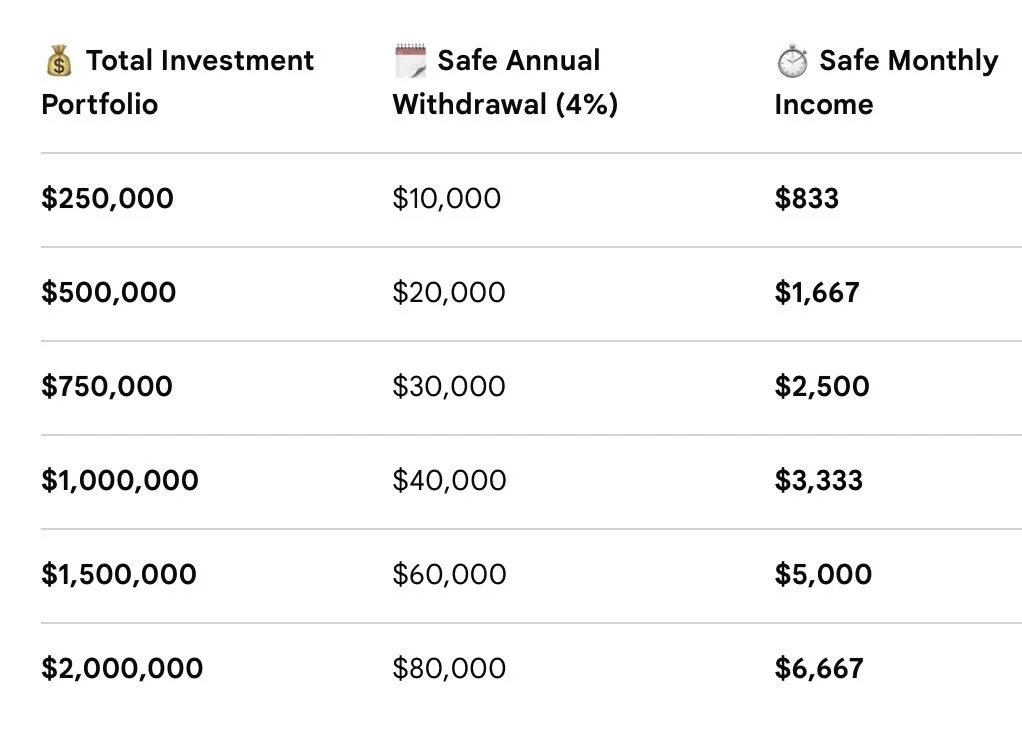
Even folks that have saved a nice safety net, say $250,000 or more, are fearful that they haven’t saved enough and will take on part-time work to delay withdrawals from their savings accounts.
For every $1000 you earn it is an equivalent of $300,000 in savings with a 4% withdrawal rate. If you don’t have the savings, at least you have health and energy to go out and earn the monthly income equivalent.
We may not have deep pockets Gen X, but we are proud, resourceful, and tenacious. We are the latchkey kids that value independence above all else. We are going to forge a new way and determine for ourselves what is most important for us in our next chapter. Our DIY Retirement will look different from the trappings of previous generations. The two most important Gen X traits that will carry us through the transition to retirement: adaptability and self-sufficiency.
They say that retirement at its core is a transition, stepping into a new era of freedom, discovery, and quiet contentment. As a generation, Gen X is accustomed to long stretches of unstructured time, a high tolerance for boredom, and the ability to entertain ourselves by reading books, playing card games or spending time outdoors. Many of us simply want our inner feral child to run free again! Meeting this goal will not require $1.4 million dollars in a 401 k account. Focus on retirement that speaks to your soul and is financially within reach. The happiest people in retirement focus less on money and more on people, purpose, and world around them.
It begins on January 1, 2027, the first of Gen X will be eligible for Social Security early retirement. It will be very interesting to see how our clever cohorts pursue their passions and interests while monetizing their retirement funds along the way! A big part of the DIY Retirement equation for Gen X will be how creative we can get. FAWA wishes you the best as you begin your retirement story.
