
Find Freedom and Money: The Fine Art of Downsizing

Disclosure: This post may contain affiliate links or paid partnerships. I may earn compensation if you click a link or make a purchase, at no additional cost to you. See my disclosure for more information.
It happens to all of us. After five or six decades of living, there are boxes of items we hold onto because they may be useful some day or things that remind us of a certain place and time. As you get closer to retirement, it is an ideal time to start the sort. Many of us have had to help our parents do the same in their later years and it is not an easy task. Some people shy away from it as they may see it as depressing, as if your life is starting to wind down.
I’m here to say there is another side to downsizing that can set you up nicely for retirement. For many, it can be a smart financial decision that can add to your peace of mind. Retirement is a new chapter, and you need to decide what matters the most to you. This can be reflected by having less clutter, more cash, fewer expenses and most of all — more freedom — to enjoy your life in retirement.
Why You Should Consider Starting the Downsize Sort Now
You have the energy to do it. As stated above, many of us have had to help an elderly relative move through the process. It seems overwhelming as you may be leading the sort, but they don’t have the stamina to do a lot in one sitting. Start the process for yourself now while you have the ability to do so.
Gain clarity as to how much space you really need. Once you see the number of possessions you want to keep, you will have a much better idea of the square footage you may need to downsize to. A smaller, more efficient home can ease financial stressors.
Starting the sort now will help you add to your retirement fund. Have you inherited a doll or coin collection from a relative? Or perhaps you are a collector yourself and built a collection as a good investment. Now may be the best time to sort and sell.
Where to Start
If you are in a home with decades of family life (school projects or artwork, holiday decorations, furniture you received from relatives), the concept of downsizing can feel daunting. This is completely normal. From the get go, it may be important to keep your main goal in focus. You are creating a home where everything earns its place, and peace of mind will flow naturally from this.
It is important to acknowledge the collection of items in your home took time to accumulate, and the sort of the same items will also take time. The process can be much more manageable if you approach it room by room. You will build momentum as you go, and you will be less likely to become burnt out by trying to tackle everything at once. The room-by-room approach works because it gives you a clear starting point each day. You are not staring at the whole house; you’re just working in one room. This small shift in perspective can make the downsizing process much more manageable.
As you move through each area of the house, you will need to create four piles: keep, sell, donate, and trash.
Step 1: Start with the Kitchen and the Bathrooms
This is a strategic choice for a reason as they are high-traffic zones. They are used every day and therefore you are very familiar with which items are used frequently and which are not. The kitchen and bath tend to be less emotional than other rooms. Except for passed down dishware, there are fewer items with attachments. If you use items daily, they need to be kept. If you use items occasionally, a judgement needs to be made regarding their future use to you. If you have unused appliances, duplicates, items with cracks or chips, or single use gadgets, they need to be moved along. Sort through everything on the shelves and discard whatever has a passed expiration date.
Step 2: The Living Room and Dining Room are Next
If you own an oversized sectional couch or a large entertainment center, know that these rarely fit in a smaller square footage home. If you can, measure the size of your new living room before you move. Don’t make the costly mistake of moving large items that won’t work in your new space.
Consider smarter options for storage such as wall-mounted shelving instead of bookshelves. Also, keep double duty items such as ottomans with hidden interior storage for blankets.
If you have a formal dining room, know that many smaller square footage homes do not. You may need to consider selling a larger table, buffet, or china cabinet that will not fit.
Larger items from a living room or dining room should be sold locally using Facebook Marketplace or OfferUp to avoid high shipping costs. eBay is best for smaller items, rare items, or collectibles. You can search for the true value of your items by searching in the sold or completed categories on the site. This gives you the best idea of what something actually sold for.
If something doesn’t sell, even large items, you can call for a free donation pick up. If you have a lot of items, you can look into estate sale services that will pick up and sell your things for you off-site. They will ask for a cut of the profit for their services, but this is an easy hands-off way of clearing out a large amount of household items all at once.
Step 3: Tackle the Closets
This can be a challenging area. Some experts say to remove everything from your closet so you can take a close look at items outside of the space where you normally see them. This allows you to look with fresh eyes. The general rule of thumb is if you haven’t worn the item in the last year or two, you should consider getting rid of it.
There are some exceptions here I believe; if you keep a couple of suits or dresses that you wear for more formal occasions (weddings, funerals, company events) it is alright to keep them.
You will need to keep off-season clothing and bedding in hidden storage (under bed storage containers are a good option). When you move to a smaller space you may need to invest in small upgrades to maximize your closet space. Consider installing double hanging rods, slim velvet hangers, and over the door storage organizers. These items are generally on sale in August when many kids are preparing to move to college dorms.
Clothing, shoes, and accessories can be resold on sites such as Poshmark, Depop, and Vinted.
Step 4: Pace Yourself Through the Garage, Basement, and Attic
This is where things can get tough. There are generally more items in storage to sort through and more decision-making energy is required to get through it. Remember to pace yourself. You may want to set aside a specific period of time with an alarm, or set a goal of completing a certain number of boxes. And then step back and give yourself a break. Slow and steady wins the race.
Be very honest with yourself. If you have sports equipment, tools, or holiday decor that hasn’t been touched in years, it may be time for them to find a new home. Items can be listed on Facebook Marketplace, OfferUp or Craigslist. Also, your sales will come easier if you time it correctly. That Frosty the Snowman lawn decoration will sell for more money and faster if you list it shortly after Thanksgiving than in the summer. Old Halloween costumes will move briskly in late September/early October.
Keep an Eye on the Next 25 Years
As you are making decisions as to which pile items will go into, keep in mind what you will need in your daily life over the next 25 years. These are the items you want to have surrounding you. Letting go of unused items can lead to a sense of relief. As you get older, downsizing can allow you to feel less stressed, and more in control.
Fewer possessions can allow you to live in a smaller space which allows for a reduction in expenses. Life is getting more expensive. A smaller, more efficient home can ease financial strain and allows money to be used for other things such as travel, or healthcare needs.
Keep your eye on the prize. You are sitting on a treasure trove of things that can be converted to cash! You get to decide if the money will be paying down debt, added to an emergency fund, or invested for future travel or medical expenses.
Here are some additional tips to consider:
Some people use painter’s tape to block a doorway once they have sorted a rarely used room. This gives you an idea of what it may feel like to live in an area with smaller square footage.
Don’t allow your children to continue to store their items in your home. Let them know that if these items are important, it is time to retrieve them.
Involving family or a trusted friend can lighten the workload and the mood. They will look at things with less sentimentality, and often with a few chuckles.
Ask your family members what they actually want rather than guessing. Don’t make them feel guilty if they don’t want Aunt Carla’s collection of glassware.
If you are on the fence whether you should keep something or not, ask if it truly adds to your daily life. Keep what serves you and adds meaning and ease to your everyday life.
When it comes to your child’s artwork, awards, yearbook photos, etc., consider scanning or taking photos of them. You can create a digital photo album for yourself and them too. It is a great way to preserve memories without taking up physical space.
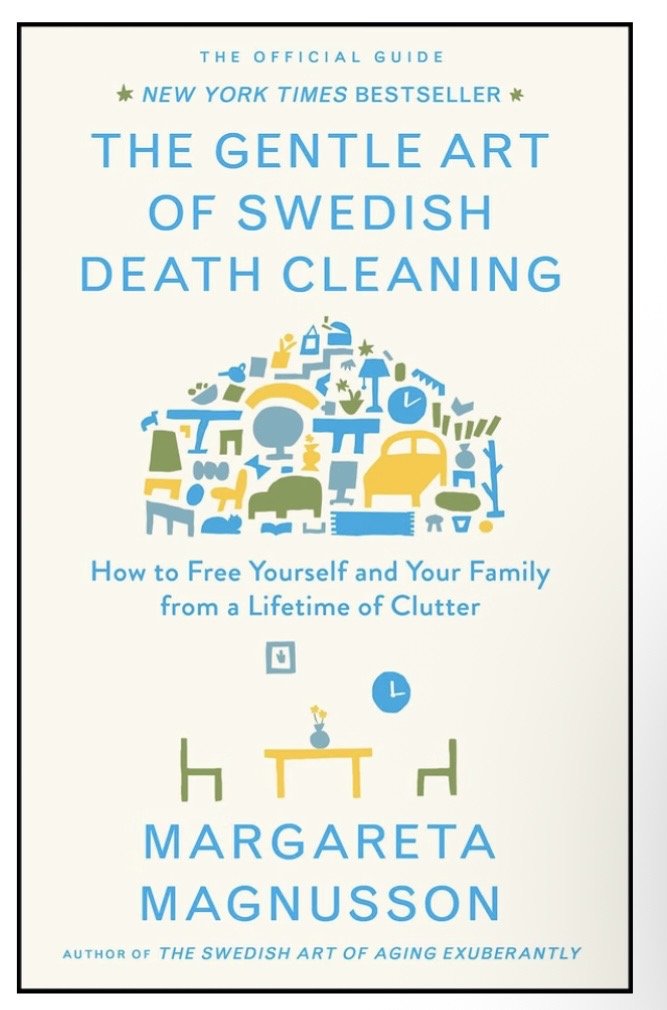
Available on Amazon
If you are looking for a more specific roadmap or just inspiration, check out The Gentle Art of Swedish Death Cleaning by Margareta Magnusson. In Sweden they declutter and organize their households, so your family doesn’t have the stress of doing so once you are gone. Click on the book to get a more detailed explanation.
As you get older, you accept yourself more where you are at. This book made me look at my wardrobe again and understand that the outfit I loved 10 years ago is now out of style and no longer suits a 60-year old. It also helped my husband organize and clear out the garage once and for all. The tools he inherited from his grandfather looked great on the peg wall and made him feel still connected, but they were never used.
Swedish death cleaning may seem like a foreign concept at first glance, but it really speaks to the Gen X in me. It takes life back to the basics. You don’t need to be surrounded by extravagance to be happy. Some of my best memories were from childhood, unplugged and free roaming. When you are not surrounded by all the things you have collected, you may find more breathing room. And a little extra cash. You don’t need a two-story house to hold it all, or constantly cleaning or insuring all of it.
The results of my Swedish Death Cleaning experiment were great. We digitized collections of photos and artwork from our children and organized it by year. Now if I feel a bit melancholy, I can simply plug in a memory stick. Our office space is cleared out. We have tax, business, and medical records downsized and well organized.
If we add something to our house now, it is on a one in, one out basis. If a colander breaks in the kitchen, we buy a replacement and toss the old one. If our current couch becomes too worn, we will make sure to buy a smaller replacement that will eventually fit into a smaller footprint in our forever home.
Downsizing is a process that requires patience and planning. You didn’t collect all of these things overnight, so don’t stress yourself too much by downsizing too quickly. Be thoughtful, assess the value of items that might bring in extra cash for your retirement, and plan ahead for the next 25 years of rest and relaxation.
